The first yes
339+ companies $6B+ in follow-on capital 12+ years backing student founders Each one started where you are
339+
$6B+
12+


The first door is the hardest. We hold it open.


Cursor is the AI code editor that has fundamentally changed how software gets built, with millions of developers who cannot imagine writing code without it.
When Michael was wrapping up years of theoretical machine learning research at MIT and decided he was ready to build, the first call he made was to DRF. We had watched him lead our Boston team as a managing partner, and we backed him before he had an idea, let alone a product.
When the early experiments were not working and other investors started asking questions, our response was simple: “We invested in Michael. He will keep going.” He did.

Today, over two million people have a Dandy product in their mouths, and the company is rewriting what it means to run a dental practice.
Toni was one of us, a member of the Dorm Room Fund team still finishing his degree at Wharton. Dan had spent his childhood in the dentist’s chair, getting braces, crowns, and bridges, watching an industry that had not changed in decades. Before either of them had a diploma, Toni’s first move was to track down a factory in Pakistan, turning a vision for modern dentistry into physical reality before most founders would have even started the pitch deck.
Dentistry had been waiting decades for someone to move that fast. We had the good fortune of having a front row seat to Toni’s speed.

Shield AI builds the autonomous systems redefining what it means to project power without putting lives at risk, from AI pilot software to the drones flying the world’s most consequential missions.
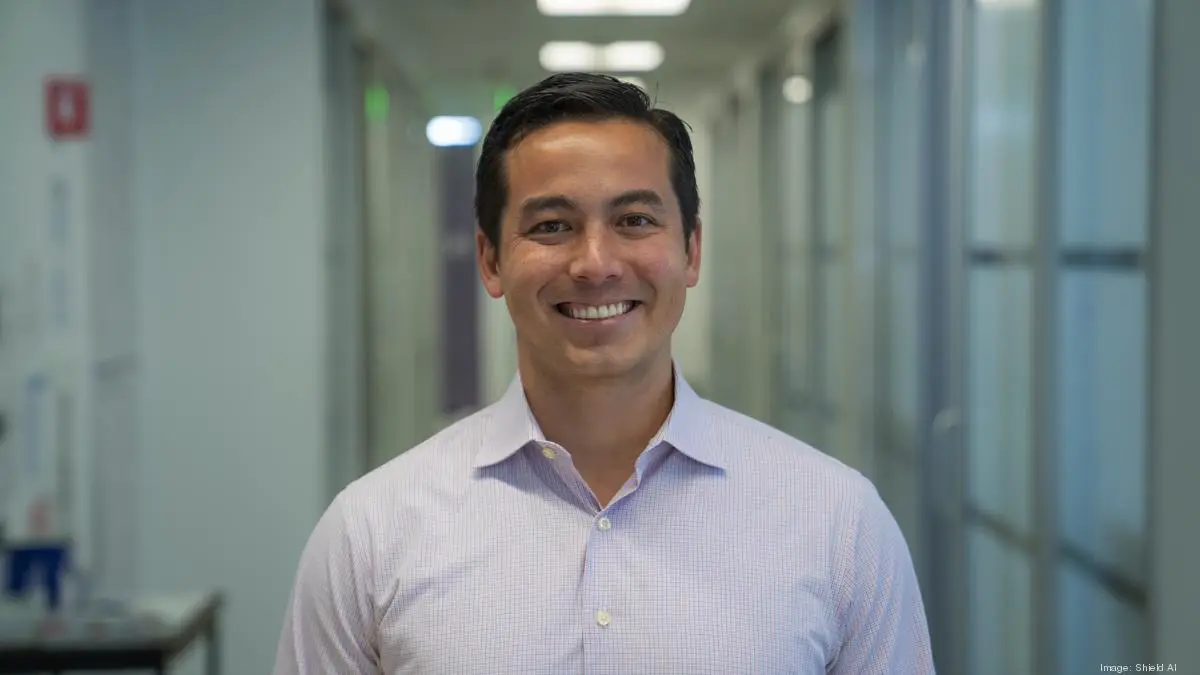
Brandon served two tours in Afghanistan watching soldiers enter buildings blind, not knowing what was behind the next door. After seven years in the Navy, he went to Harvard Business School with a thesis: artificial intelligence could change that. His brother Ryan, an engineer and entrepreneur whose last company had been acquired by Qualcomm, agreed.
When they started raising, 29 of 30 investors passed. The only other term sheet on the table required them to abandon the mission. We did not.

Commure is the AI operating system rebuilding American healthcare, giving physicians back time they had forgotten existed and processing claims across hundreds of organizations that once required armies of administrators.
Tanay and Deepika met as teenagers competing on the elite science fair circuit and began building on opposite ends of California. Tanay was running machine learning experiments at Stanford, Deepika using herself as a human test subject in her USC dorm room.
When they ran their first clinical trial in 2016, they spotted a leukemia diagnosis three weeks before the hospital confirmed it. That is when we knew we were looking at something different.


Hightouch is the data activation platform powering revenue teams at some of the world’s biggest companies.
Wind the clock back to 2019, and Kashish was pulling all-nighters in the Wharton library, finishing his master’s and undergrad in four years, and already in deep conversation with CFOs about what they actually needed. He was unusually serious and customer-obsessed before he had any right to be.
We were not betting on the idea. We were betting on him. While the idea was going to change, the person was not.
Félix moves remittances for Latin American immigrants across nine countries entirely through WhatsApp, replacing a trip to the corner store with a single message.
Manuel grew up in Venezuela and left for Caltech to study electrical engineering, then spent his twenties building hardware for oil wells, work with nothing to do with payments or immigrants. What he carried with him was his mother, who spent years sending money to his grandmother and watched it arrive late and lighter than it left. He came to Wharton already planning to build something out of that memory, not to recruit for a job like most of his classmates.
Bernardo had spent his own twenties a world away from Venezuela, in Guadalajara and then in consulting and at Uber, but he understood the same problem from a different angle: financial systems that had never been built with immigrants in mind. The two crossed paths at a Latino-focused MBA event, and Manuel invited him into a builder session he had started himself.
A classmate in Manuel’s own cohort introduced us to him. By then, he and Bernardo were already spending their weekends at flea markets, asking strangers to trust a text message with their family’s savings. We do not forget founders whose instinct is to do that kind of work themselves.
Prepared is the AI layer sitting inside 911 call centers nationwide, transcribing, translating, and flagging critical details in real time so nothing gets lost between a caller in crisis and the responder racing to reach them.
Michael Chime, Dylan Gleicher, and Neal Soni built Prepared out of proximity to tragedy rather than distance from it. Michael grew up near Chardon High School, where a shooting killed three students in 2012. That same year, Dylan and Neal were growing up fifteen minutes from Sandy Hook Elementary. The three of them turned that shared history into a mobile alert tool for schools, then left Yale after their junior year to keep building it full time.
A hospital in New Jersey once asked to see a feature Prepared did not yet have. The team built it in two weeks, submitted it for emergency approval the same night they were due to demo it, drove three hours, and trained the staff on four hours of sleep. By the following morning, they had locked down an entire hospital campus during a simulated active shooter drill, on software that had not existed two weeks earlier.
We met them through classmates on the very campus they had walked away from. What drew the founders in return was not the check, but a room full of other students also doing what everyone said they were too young to do.
Vulcan Elements is rebuilding American capacity to manufacture rare earth magnets, the material powering everything from submarine propulsion to the electric grid, after decades of depending on someone else’s supply chain.
John had spent years overseeing billions of dollars annually across the Navy’s ballistic missile and fast attack submarine programs before he ever set foot at Harvard Business School. That experience left him convinced rare earth magnets were a vulnerability the country could not keep ignoring, well before it became a headline.
Two of our own students noticed him independently: a classmate of his at HBS, and an MIT Sloan MBA student whose focus was environmental science. When two people from different ecosystems land on the same name for different reasons, that is exactly the signal we pay attention to.


Shinkei is doing what no one else has done: bringing the tools of the modern world to an industry that has fed humanity since the beginning of it.
When we first met Saif, the prototype was a nail taped to a 3D printer in his dorm room. He grew up in Dubai and had never set foot on a commercial fishing boat, but he was not going to figure out the fishing industry from inside a lab. He packed his bags and moved to Maine, working alongside fishermen in conditions that were brutal by any measure.
He ended up hospitalized and still did not come home early. We back founders before the breakthrough. Saif is exactly why.

Inversion is building what no one else has attempted: an autonomous capsule that can return cargo from space to anywhere on Earth in under an hour.
Justin and Austin were already doing the impossible before they had their degrees. Before enrolling in college, Justin won best in show at the largest woodworking conference in North America for a tool he invented himself. Austin designed an entire orbital class rocket engine thrust chamber at ABL Space Systems, a first for any student, going from no knowledge to test in under two weeks.
By the time we met them, they were already partners founding and leading the BU Rocket Propulsion Group together. We backed two people who had never once encountered a problem they did not try to build their way out of.

Endex is the first AI agent built natively for Excel, turning the most ubiquitous financial tool in the world into something that thinks.
Tarun and Kevin met on a math website in fifth grade, a friendship forged in the kind of curiosity that does not sit still. Duke recognized the same thing in Tarun, offering him one of their most competitive full scholarships, covering eight semesters of tuition, room, and board, reserved for students the university considers among the most exceptional it will ever admit. He walked away from it to build.
We found them in a hotel lobby mid-pivot, still shaping what Endex would become. At DRF, that is not a risk. That is the point.
A network built
for the next problem